
Honest 2026 pricing for aluminium, glass, timber, automatic door and roller shutter shopfronts in the UK — including what's actually included in a quote and the factors that move the number up or down.
Published April 2026 · 9 min read
If you're researching shopfront prices for the first time, you've probably noticed that nobody puts numbers on their website. There's a reason for that — every job is different. But the absence of any pricing leaves first-time buyers anchorless, so this guide gives you honest 2026 ranges based on the work we and other UK installers actually quote, plus the factors that move a number up or down.
The numbers below are typical mid-market UK prices for a single retail unit, supplied and fitted, including VAT. Premium specifications and complex sites cost more; tight commodity-spec jobs cost less. None of this is a quote — for that you need a survey — but it should give you a workable mental model before you call anyone.
For a standard high-street retail unit roughly 4–5 metres wide:
To these, you'll typically add:
So a single-unit retail refit with a new aluminium frontage, electric shutter and printed fascia would land around £6,000 – £12,000. The same unit done in hardwood with dimensional gold-finish lettering and a heritage cornice could comfortably reach £15,000 – £25,000.
The four biggest variables on any quote, in roughly the order they matter:
Aluminium is the workhorse — strong, low-maintenance, comes in any RAL colour, and has economies of scale because every glazier in the UK fits it daily. Glass-led frontages cost more because the glass itself is more expensive (toughened or laminated, often oversized panels) and because installation needs more people on site for handling. Hardwood timber is the most expensive option in raw materials and labour, but on conservation-area or premium retail sites it's often the only spec that gets through planning and matches the building's character.
A flat 4-metre frontage with two windows and a centre door is the easy case. Doubling the width roughly doubles the material cost but only adds 30–40% to the labour. Where complexity creeps in is corner units, wraparound glazing, frontages with structural glazing requirements, mezzanine glazing, or units with awkward levels and tile-clad stallrisers that need careful integration.
If we can park outside, work between 8am and 5pm, and the shop next door is happy with a bit of disruption, the install is straightforward. If the unit is on a pedestrianised high street, requires overnight or Sunday work to keep the shop trading, needs scaffolding, or has restricted vehicle access, expect 15–30% on the labour bill. Listed buildings and conservation areas add planning costs and lead time as well.
The same aluminium frontage can have £900 worth of glass in it or £3,500 worth, depending on whether it's standard toughened, laminated, low-emissivity coated, decorative interlayer, or smart switchable glass. Door hardware ranges from £80 ironmongery to £1,200+ commercial-grade access systems. Powder-coat finishes are roughly £200–£600 extra over standard mill colours. None of this is gouging — it's real cost difference in materials.
By volume, this is what most retailers fit. A standard installation includes:
What pushes the price up: thermal break specifications for energy-rated buildings, oversized panels, structural mullions, double-glazed units (which require deeper profile and increase weight), shopfront with curtain-walling above, security-rated profile (PAS 24 or LPS 1175), and decorative elements like mid-rails or transom bars.
"Glass shopfront" is shorthand for frameless or minimal-frame frontages where the glass is the structural element, often floor-to-ceiling and held by floor-mounted patch fittings rather than a traditional aluminium frame. They look fantastic and they're the right answer for showrooms, hospitality and premium retail — but they're significantly more expensive than aluminium because:
If you've been quoted under £5,000 for a "frameless glass shopfront" the chances are it's a slim-aluminium-framed system being marketed as glass. Real frameless glass at retail-fit dimensions doesn't go below about £6,500 in 2026.
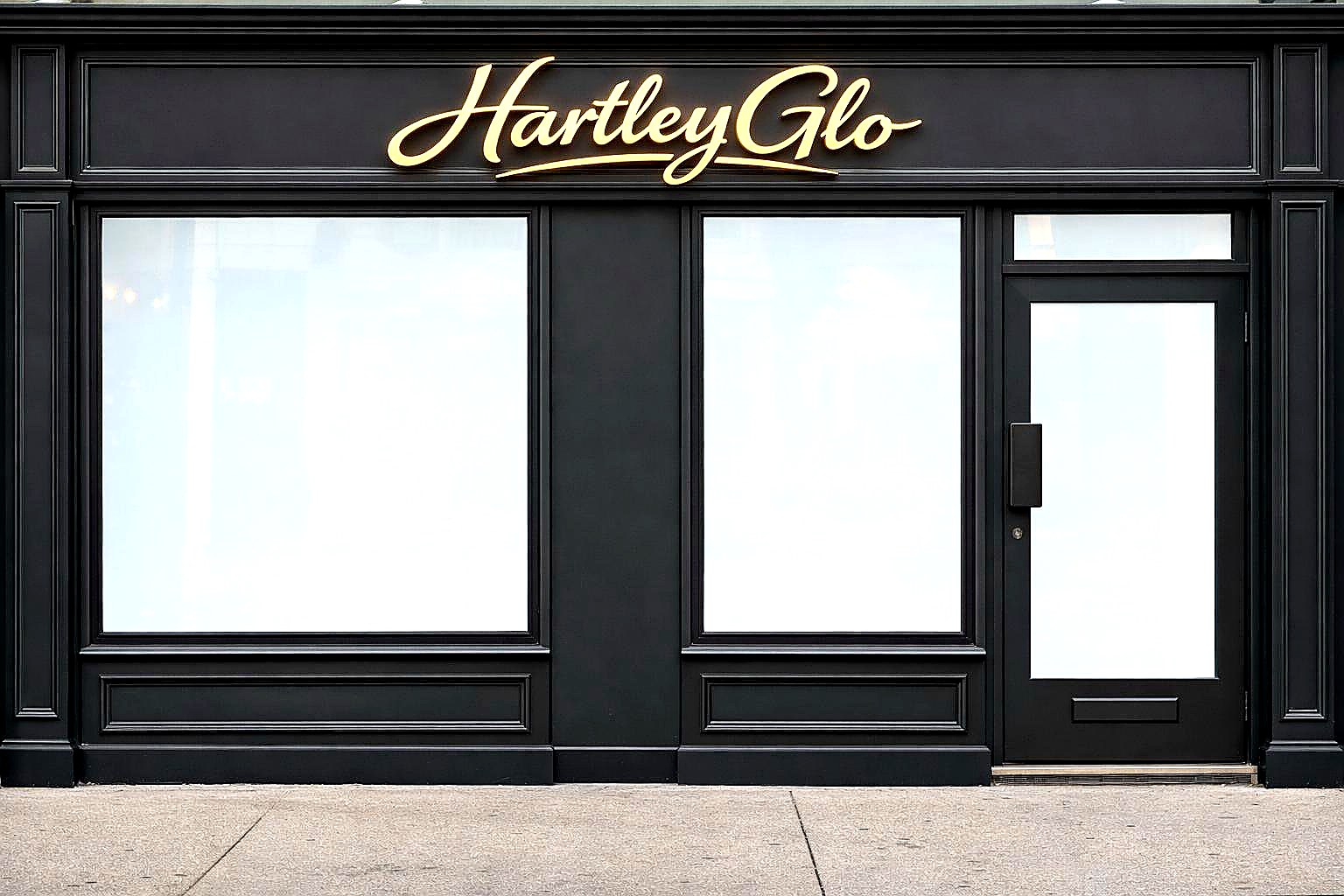
Timber is the answer where character matters more than budget — heritage retail, conservation areas, listed buildings, and any premium independent where the frontage is part of the brand. Recent project example: the Hartley Glo unit in Hartley Wintney (Hampshire) used timber with a dentil cornice and dimensional gold lettering, with the result being one of the most photographed shopfronts on the High Street.
What you're paying for in timber:
Timber lasts 30–50 years if maintained correctly, which is materially longer than aluminium powder-coat life. On a 30-year ownership horizon, timber and aluminium are closer in total cost than the upfront price suggests.
uPVC is at the budget end of the market. It's appropriate for back-of-house entrances, secondary frontages, light-traffic offices and budget refurbishments. It is not appropriate for premium high-street retail because the visual cues are wrong — uPVC reads as "domestic window company" rather than "shop." If your spec calls for uPVC and you're not sure, talk to whoever's quoting and ask whether thin-profile aluminium might be a better answer in the same budget bracket.
Sliding or swing, single or double leaf, including the operator (Dorma, Record or Geze), sensors, safety beams, and integration with any access control. Pharmacies and clinics almost always specify these for DDA compliance. The £9k+ end of the range covers high-traffic supermarkets and entrances with bespoke architectural detailing around the operator.
Solid lath, perforated lath or insulated. Electric is typical now — manual is fine for very small openings but stops being practical above about 3 metres wide. Higher security ratings (LPS 1175 SR2 / SR3) and insulated construction (for weather sensitivity or noise reduction) add £500–£1,500 per opening.
The single biggest visual upgrade you can make over a flat printed fascia. Costs depend on the letter style (cut acrylic at the budget end, brushed stainless or gold-finish at the premium end), the number of characters, and whether the lettering is illuminated.
A complete quote from a competent UK installer should cover:
What's not normally included: planning permission application fees, listed building consent, structural engineer's reports if the opening needs altering, asbestos surveys on older buildings, after-hours uplift if you ask for it. Get clarity on these before you sign anything.
Three things make a quote land more accurately:
If you'd like a fixed quote on a specific premises in the UK, our surveyors come out free of charge and follow up with a written quote within 72 hours. Request a quote or call 0800 088 6248.
Yes — all the figures in this guide include UK VAT at the standard rate. Some installer quotes show ex-VAT, so always check what basis you're comparing on.
No. Most like-for-like shopfront replacements in non-listed, non-conservation locations qualify as permitted development and don't need planning consent. Where consent is needed (conservation areas, listed buildings, or designs that materially alter the existing frontage) you'll typically be looking at £400–£800 in council fees plus drawings, on top of the install cost.
Standard practice is 30 days. After that, materials prices may have moved (aluminium and glass are particularly volatile right now) and the installer is entitled to revise.
You can but it's usually a false economy. A single installer covers integration, warranty, and one point of accountability if anything goes wrong. Splitting suppliers tends to save 5–10% on paper and lose it again on coordination headaches.
Powder-coat respray of the existing aluminium plus new dimensional fascia signage and a deep clean. Total cost £800–£2,500 depending on size, and it can transform the look of a tired but structurally sound frontage. A good installer will tell you when this is the right answer rather than push you into a full replacement.
Free site survey, written quote within 72 hours, no obligation. UK-wide coverage from our Great Barr workshop.
Request a Quote