
A practical 2026 guide to UK shopfront planning permission — including permitted development rules, conservation areas, listed buildings, advertisement consent, application timelines and what to do if you're refused.
Published June 2026 · 11 min read
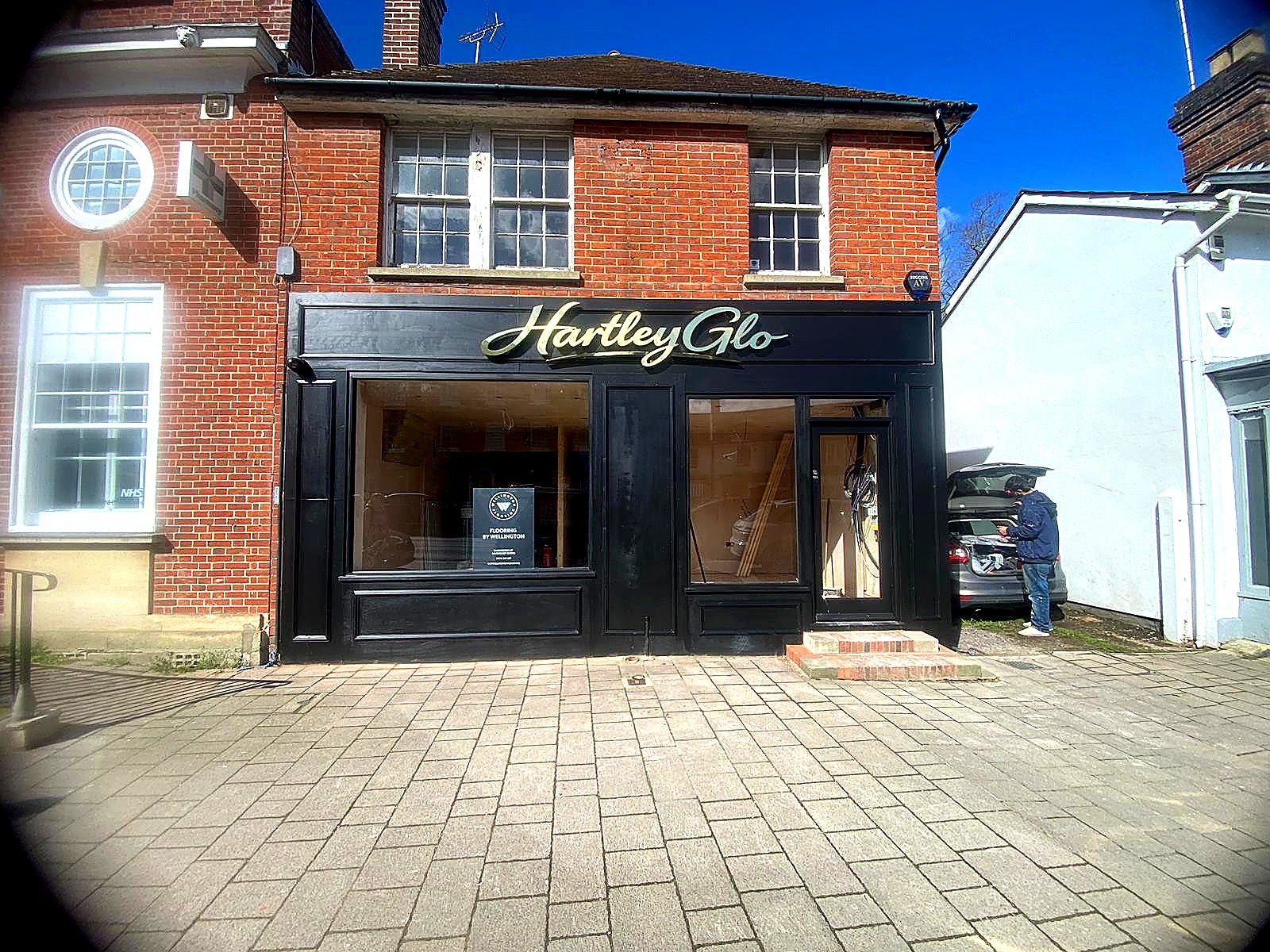
Planning is the most stressful part of a shopfront refit for most first-time buyers — partly because the rules are genuinely complicated, partly because every council interprets them differently, and partly because getting it wrong can mean enforcement action and an order to undo expensive work. This guide explains what the law actually requires, when you need consent, and how to handle the awkward cases.
Standard caveat first: we install shopfronts and we work with planning officers regularly, but we're not planning consultants. For complex sites — listed buildings, contested conservation areas, large-scale refits — get advice from a chartered planner before you commit to a spec. For everything else, this guide should give you a workable starting point.
For most UK shopfront replacements you don't need planning permission, provided:
If any of those conditions don't apply, you may need consent — usually one or more of: full planning permission, listed building consent, conservation area consent, or advertisement consent. Each has different rules.
Any work to a listed building's external appearance — including replacing the shopfront — requires Listed Building Consent. There are no exemptions for like-for-like work because Historic England's position is that no shopfront work is truly like-for-like. Penalties for unauthorised work to a listed building are criminal, not civil; this is the case where you absolutely cannot take chances.
Check whether the building is listed at historicengland.org.uk/listing/the-list or via your local council's planning portal.
Most UK historic town centres, market towns, Georgian quarters and traditional high streets sit within designated conservation areas. The legal effect is that "permitted development rights" are restricted — many alterations that would be allowed elsewhere need permission here.
For shopfronts specifically: if you're replacing an existing shopfront with materials and proportions that closely match what's there, many councils will treat this as not requiring consent. If you're materially changing the appearance — swapping aluminium for glass, changing colours dramatically, fitting modern profile systems where traditional ones existed — you'll likely need permission.
The safest approach is to ring the council's conservation officer before you finalise specifications. Most conservation officers will give you an informal "yes that'd be fine" or "no you'd need an application" in a five-minute phone call. This is a free service most owners don't use enough.
If you're converting a premises from one use class to another — a shop becoming a restaurant, an office becoming a retail unit — the change of use itself usually triggers planning permission. The shopfront work then becomes part of that wider application rather than a standalone consent.
If you're enlarging the shopfront opening (knocking out a section of wall to widen it), reducing it (bricking up part of it), or repositioning the entrance, you've moved beyond shopfront replacement into structural alteration. Planning permission usually applies regardless of conservation area status.
Even outside conservation areas, councils retain authority to require consent for changes that "materially affect the external appearance" of the building. In practice this is rarely enforced for shopfronts on standard high streets, but for prominent buildings or sensitive locations it can apply. If in doubt, ask the council.
Signage on a shopfront is governed by a separate consent system: The Town and Country Planning (Control of Advertisements) (England) Regulations 2007, with similar versions in Wales, Scotland and Northern Ireland.
Most fascia signage is "deemed consented" — that is, allowed automatically — provided it meets these conditions:
If your sign is illuminated above the limit, projects further out (a hanging sign, blade sign, or projecting box), or you're putting up multiple signs, you need formal Advertisement Consent. Same applies in conservation areas where the deemed-consent rules are tighter.
External solid-lath roller shutters are the planning bête noire of most British high streets. Many councils have adopted policies actively discouraging or refusing them on aesthetic grounds — they make a high street look like a retail park overnight, and councils know this.
What's typically permitted:
If security is a concern but external shutters won't get past planning, the modern answer is internal collapsible grilles or laminated glass with security film — both of which are permitted under most planning regimes.
The process is:
You have two routes:
The most common reasons for refusal on shopfront applications are: out-of-character materials in conservation areas; signage that's too large, too bright, or too modern; loss of original architectural detail; and external shutters in protected locations. Each is usually addressable with spec changes rather than abandoning the project.
Existing aluminium frontage replaced with new aluminium in the same colour and proportions, on a non-listed building outside any conservation area. No consent needed. Survey, fit, done.
Removal of 1990s aluminium frontage on a Georgian high street, replacement with hardwood timber sympathetic to the surrounding shopfronts. Planning permission required because of conservation area, but the change is policy-supported (improving on a previous unsympathetic addition). 8-week determination, granted. This is the Hartley Glo project in Hartley Wintney.
Replacement frontage with a 4m wide internally-illuminated halo-lit sign. Advertisement Consent required because of illumination intensity. Granted on standard 5-year consent term, with a condition requiring the sign to be turned off between 23:00 and 07:00.
Buyer specified external solid shutters on a unit within a designated shopping area conservation zone. Refused on grounds of detrimental impact on the streetscape. Resubmission with internal collapsible grille and laminated security glass — granted.
For most buyers, dealing with the council directly is fine — the process is well-documented and councils are generally responsive. For more complex sites we offer a planning support package as part of the project: pre-application correspondence with the conservation officer, preparation of drawings and materials schedules, and submission of the application on your behalf. This is typically £350–£900 added to the project depending on the complexity, and it saves engaging a separate architect or planning consultant.
We won't take this on for listed buildings or genuinely contested conservation cases — those need a chartered planner — but for the standard "is this conservation area going to be a problem?" cases, it works well.
Technically yes; practically a terrible idea. Retrospective applications are decided on the same merits as advance ones, but if refused you face an enforcement notice requiring you to undo the work. We've seen buyers asked to remove £20,000+ frontages because they didn't apply first. Always apply first.
Almost always yes — your lease will normally require landlord consent for external alterations regardless of planning. Get this in writing alongside any planning application. Many landlords are happy to consent if they see the spec and quote, but they need to be asked.
Yes, separately from planning. Shopfront installation typically falls under Building Regulations Part L (energy efficiency) and Part M (accessibility). Most installers self-certify under FENSA or equivalent — confirm yours does so the certification is included.
Standard grant is 3 years from the date of decision, by which point work must have started. After that the consent lapses and you'd need to reapply.
In conservation areas, yes — councils can require colour changes as conditions of consent, particularly heritage-coordinated palettes. Outside conservation areas, councils have very limited authority over colour choice on shopfronts. Most will only object if the colour is genuinely jarring with the streetscape.
Each has its own planning regime with similar but not identical rules. Scotland's "Planning etc (Scotland) Act 2006" governs there; Wales follows broadly the same rules as England with separate fee scales; Northern Ireland uses the "Planning Act (Northern Ireland) 2011". The same principles apply — listed buildings always need consent, conservation areas usually do, like-for-like replacements usually don't — but check with your devolved administration's planning portal for specifics.
If you'd like a free survey on a specific project — including a view on whether planning is likely to apply — request a quote or call 0800 088 6248.
Free site survey, written quote within 72 hours, no obligation. UK-wide coverage from our Great Barr workshop.
Request a Quote